
The Simple Joy of Handmade Tissue Paper Flowers
Handmade tissue paper flowers are one of the easiest, most affordable crafts you can make — and the results look stunning.
Here’s a quick overview of how to make them:
- Stack 8-12 sheets of tissue paper
- Fold accordion-style in 1-inch folds
- Tie the center with a pipe cleaner or string
- Cut the ends into your chosen petal shape
- Fluff each layer gently toward the center
That’s it. Two flowers in under 10 minutes, for as little as 50 cents each.
These blooms work for almost any occasion — birthday parties, baby showers, weddings, classroom decorations, or a heartfelt handmade gift for a teacher. They don’t wilt, they don’t need water, and they can be made in any color imaginable.
Don’t think of yourself as a “crafty” person? That’s exactly who this is designed for. If you can fold paper and use scissors, you can make these.
The sections below walk you through everything — materials, step-by-step instructions, petal variations, sizing options, and display ideas — so you can jump straight to what you need.

Essential Materials for handmade tissue paper flowers
Before we dive into the folding, we need to gather our supplies. One of the best things about making handmade tissue paper flowers is that the barrier to entry is incredibly low. You likely have most of these items in your junk drawer or home office already.
The star of the show is, of course, the tissue paper. For the best results, we recommend a tissue paper weight between 7-20gsm. This weight provides the perfect balance; it is thin enough to be translucent and delicate, yet strong enough to be manipulated without immediate tearing. If you are looking for a more “everyday” alternative, high-quality facial tissues can also be used for smaller, softer blooms.
To help you plan your project, here is a quick reference guide for sizing your materials:
| Sheet Size (Inches) | Layers Needed | Resulting Flower Diameter |
|---|---|---|
| 18 x 16 | 10+ | ~16 inches (Giant) |
| 15 x 13 | 8+ | ~15 inches (Large) |
| 12 x 10 | 6+ | ~10 inches (Medium) |
| 10 x 8 | 5+ | ~8 inches (Small) |
In addition to your paper, you will need:
- Sharp Scissors: Essential for clean petal cuts.
- Pipe Cleaners or Floral Wire: These act as the “spine” of your flower and can double as a stem.
- Floral Tape: Perfect for wrapping wire to create a realistic green stem.
- Markers: For adding a pop of color to the edges of your petals.
- String, Yarn, or Fishing Line: If you plan on hanging your flowers from the ceiling.
If you are new to paper crafting, you might find our Paper Art Creations An Easy Tutorial helpful for getting a feel for the medium.
Step-by-Step Guide to Crafting Your First Bloom
Now that your station is set up, it’s time to create. Making handmade tissue paper flowers is a rhythmic process that becomes quite addictive once you get the hang of it.
1. The Stack
Start by stacking your sheets of tissue paper. For a standard, full-looking flower, we recommend 8 to 12 sheets. If you want a multicolored effect, place the “center” color on top of the stack and the “leaf” color at the very bottom.
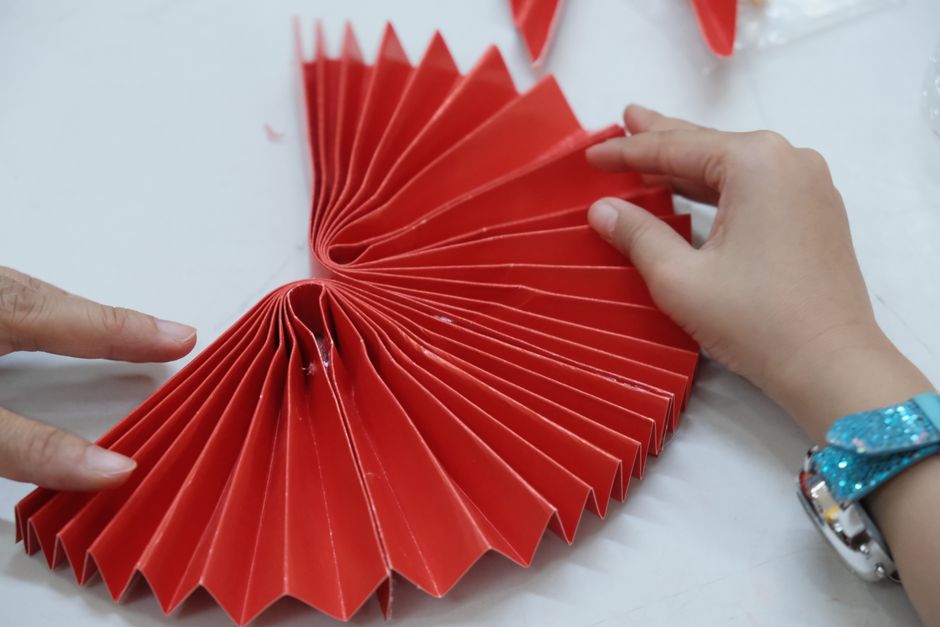
2. The Accordion Fold
With the shorter side of the paper facing you, begin folding the stack back and forth in an accordion style. For most flowers, a 1-inch fold width is the sweet spot. Ensure each crease is crisp by running your finger along the edge.
3. Secure the Center
Fold your accordion strip in half to find the exact midpoint. At this center point, cut a small notch on both sides of the paper—this reduces bulk and makes fluffing much easier. Wrap a pipe cleaner, floral wire, or string tightly around these notches and secure with a double knot or a twist. For more detailed insights on this specific style, you can explore these 9 Effortless Steps to Craft Stunning Tissue Pom Pom Flowers.
4. Shaping the Petals
While the paper is still folded in a tight strip, use your scissors to trim the ends. (We will cover specific shapes like rounded or pointed in the next section!) Make sure your cuts go at least an inch deep toward the center tie to ensure the flower fans out properly.
5. The Gentle Fluff
This is where the magic happens. Fan out the two sides of your accordion. Gently—and we mean gently—peel the top layer of tissue paper up toward the center. Repeat this layer by layer, alternating sides to keep the flower symmetrical. If you need a visual refresher, check out our Step By Step Guide To Handmade Paper Flowers.
Customizing Petal Shapes and Advanced Techniques
The beauty of handmade tissue paper flowers lies in their versatility. By simply changing how you trim the ends of your folded paper strip, you can mimic entirely different species of flowers.
- Rounded Edges: Trimming the ends into a semi-circle creates a soft, romantic look perfect for peonies or English roses.
- Pointed Tips: Cutting the ends into a sharp “V” or triangle shape will give you the spiky, dramatic look of a dahlia or a cactus zinnia.
- Fringed Cuts: Making many narrow, vertical snips (about 1 inch deep) results in a shaggy, textured bloom that looks like a chrysanthemum or a marigold.
For those looking to take their craft to the next level, try experimenting with color. You can create an ombre effect by stacking shades of the same color from darkest to lightest. Another advanced tip is the “bleaching technique.” By dipping the edges of your folded tissue into a mixture of 1 tablespoon bleach and 1.5 cups of water for five seconds, you can create realistic, faded gradients that mimic the way real flowers age. You can find more inspiration for these variations in our guide on DIY Paper Flowers At Home.
Creating Realistic handmade tissue paper flowers
To make your handmade tissue paper flowers look less like a craft project and more like a botanical wonder, use the “scissor curl” method. Gently run the edge of your scissors along the rim of the fluffed petals to give them a natural inward or outward curve.
If you want a delicate, translucent texture, try using facial tissues instead of standard craft tissue. You can even add a sensory element by lightly spraying the finished bloom with your favorite perfume. For those just starting out, our Paper Decoration Crafts For Beginners provides excellent foundational tips for achieving these realistic touches.
Scaling Your handmade tissue paper flowers from Mini to Giant
Size matters when it comes to impact.
- Giant Flowers: Use full 18×16 inch sheets and increase your accordion folds to 2 inches wide. These are perfect for photo backdrops or “wow” moments at a party.
- Mini Flowers: Cut your tissue sheets into smaller 4-inch squares. These require a tighter, 0.5-inch accordion fold and are great for gift toppers.
Working on a project with little ones? Smaller flowers are often easier for tiny hands to manage. Check out these Simple Papercraft Ideas For Kids for more age-appropriate scaling tips.
Creative Ways to Display Your Paper Creations
Once you have a bouquet of handmade tissue paper flowers, what do you do with them? The possibilities are endless.
- Wall Backdrops: Use painter’s tape to secure giant blooms to a wall for a stunning, budget-friendly photo booth.
- Wedding Arches: Mix different sizes and colors to create a romantic, non-wilting archway for ceremonies.
- Home Decor: Place a few long-stemmed paper flowers in a vase to brighten up a living room corner that doesn’t get enough sun for real plants. See our guide on Handmade Decoration For Your Living Room for more styling tips.
- Nursery Mobiles: Hang small, pastel-colored pom-poms from a wooden hoop for a soft, whimsical nursery feature.
- Gift Toppers: Instead of a plastic bow, use a handmade flower to add a personalized touch to a present.
Whether you are decorating for a grand event or just looking for Budget Friendly Home Decor Crafting ideas, these flowers provide maximum visual impact for minimum cost.
Frequently Asked Questions about Tissue Paper Blooms
How many sheets of tissue paper are needed for a full flower?
Typically, 8 to 12 sheets are the gold standard for a lush, full bloom. Using fewer than 6 sheets may result in a flower that looks “flat” or shows the center wire too easily. For giant flowers, we recommend sticking to the higher end (10-12 sheets) to ensure the paper can support its own weight once fluffed.
How do I prevent the tissue paper from tearing while fluffing?
Tearing is the most common frustration, but it’s easily avoidable. First, ensure you are using high-quality 7-20gsm paper. Second, always work from the center of the flower outward. Instead of pulling the paper from the very edge, grip it closer to the tied center and gently “tease” it upward. If a small tear does happen, don’t worry—the ruffled nature of the flower usually hides minor imperfections!
What is the typical cost and time commitment?
This is one of the most budget-friendly crafts in existence. A single package of tissue paper from a dollar store (usually around $1.00) can often make two giant flowers or dozens of mini ones. That brings the cost to roughly 50 cents per giant bloom. In terms of time, once you have your materials prepped, a single flower takes about 5 to 10 minutes to assemble.
Conclusion
At Ritmoearte, we believe that the best gifts aren’t always the most expensive—they are the ones that show effort and heart. Handmade tissue paper flowers are the perfect example of this philosophy. Whether you are creating a vibrant bouquet for a teacher to show your heartfelt appreciation or decorating your home for a seasonal celebration, these paper creations offer a personalized touch that store-bought items simply can’t match.
Ready to explore more ways to get creative with paper? Visit our Paper Crafts section for more inspiration, tutorials, and DIY ideas that turn simple materials into extraordinary memories. Happy crafting!
